The Compound Comeback: Why Multi-Structure Estates Are Back, and How to Sell Them Before They’re Built
1. The Compound Comeback
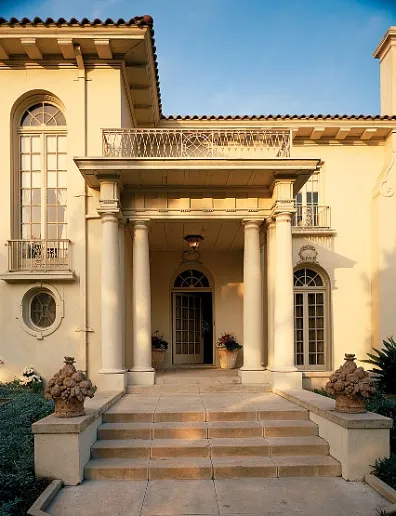
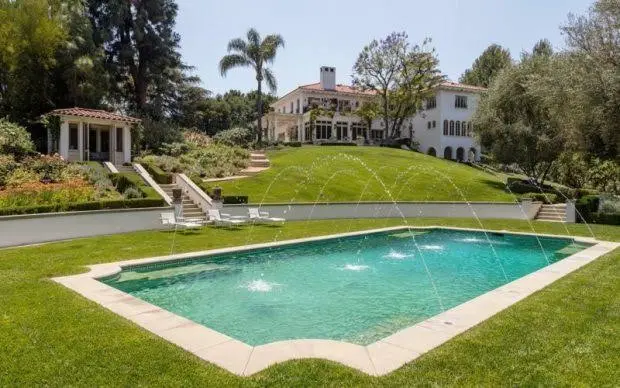
Angelina Jolie’s sale of the historic Cecil B. DeMille estate for $24.75 million is a reminder that compound living is having a moment in luxury real estate. The 11,000-square-foot main residence sits on two acres in Los Feliz alongside a guest house, pool house, tea house, hidden treehouse, and separate garage and security station. This is not a single home. It is a collection of discrete structures operating as one private world.
The DeMille estate is not an outlier. Across the ultra-luxury market, the compound typology is surging. Billionaires like Ken Griffin, Jeff Bezos, and Larry Ellison have spent hundreds of millions assembling adjacent properties into sprawling private estates—a trend the Wall Street Journal has dubbed “landmaxxing”. U.S. luxury property searches doubled from January to May 2026 compared to the year before, and searches for buildable land jumped 97%. Multigenerational living is driving the shift: a record 17% of homebuyers purchased a multigenerational home in 2024, up from roughly 11% in previous years.
2. Why Compounds Are Notoriously Hard to Sell Off-Plan
Selling a single luxury villa off-plan is challenging. Selling a compound is exponentially harder. The problem is not the product. It is the pitch.
A compound’s value lies in how its parts relate to one another: the privacy between the main house and guest house, the circulation from pool house to tea house, the separation between family zones and staff areas. Flat aerial renders and static floor plans cannot communicate these relationships. They flatten hierarchy, hide privacy distances, and make density feel threatening rather than generous.
This is not theoretical. A seven-hectare private resort in the Maldives faced exactly this problem. Early schematic renders failed to convert masterplan intent into market confidence because flat aerial views obscured the separation strips between villas, making investors doubt the density. Generic turquoise water textures erased the lagoon-to-ocean gradient critical for snorkeling and diving. Midday lighting flattened spatial hierarchy and made arrival sequences indistinguishable. Three qualified consortium partners postponed conversations, delaying $18 million in pre-opening revenue commitments.
Compounds fail off-plan when buyers cannot feel the space between structures. They cannot picture how a morning unfolds: coffee in the tea house, a swim in the pool, an afternoon in the guest house with family who have their own front door. Without that emotional sequence, a compound is just an expensive collection of buildings.
3. Staged 3D Masterplan Visualization and Sequenced Flythroughs
The solution is not more images. It is a different kind of image—one that guides the viewer through the estate as a spatial system rather than presenting it as an object.
Staged 3D masterplan visualization treats the compound as a continuous visual narrative. Instead of a single aerial hero shot, it sequences the viewer through the experience of arrival, circulation, and occupation. A sequenced flythrough moves from the entrance gate through the main residence, out to the pool terrace, across a covered walkway to the guest house, and into the private garden beyond. Each transition answers the buyer’s unspoken question: How does this place actually work?
For the Maldives resort, this approach transformed the sales conversation. Rather than showing isolated villa renders, the visualization team worked at island scale, visualizing the entire atoll as a walkable spatial system. Investors could evaluate land-use efficiency, privacy gradients, and guest circulation before construction began. The result: partner-to-signed-agreement conversion reached 34%, qualified partner inquiries increased 227%, pre-opening commitments exceeded target by 21%, and the launch closed 53% faster than comparable resort launches in the Maldives.
The lesson for compound developers is clear. A static render sells a building. A sequenced flythrough sells a way of life.
4. Selling Compounds in Southeast Asia
Southeast Asia is becoming a significant market for compound-style luxury developments. Raffles Residences Bali, opening in Q2 2026, is a community of 28 ultra-luxury villas on a 5.3-hectare oceanfront estate in Jimbaran. The residences are designed at low density to maintain privacy between homes, with interiors supporting multi-generational living and flexible rooms that can serve as wellness studios, studies, or additional suites. The development integrates existing trees, local materials like Palimanan limestone and ironwood, and ocean-to-mountain views that carry deep significance in Balinese cosmology.
Developers building villa compounds and resort estates across the region face the same challenge as the Maldives resort: how to communicate privacy, circulation, and lifestyle before a single foundation is poured. Southeast Asian compounds often contend with additional complexity—steep terrain, tropical vegetation that changes with seasons, and cultural expectations around indoor-outdoor living that generic renders fail to capture. Staged masterplan visualization addresses these variables directly, showing how morning light moves through a courtyard, how monsoon rains are channeled away from living areas, and how the boundary between private villa and shared resort amenity is maintained.
5. Pulse Design’s Approach
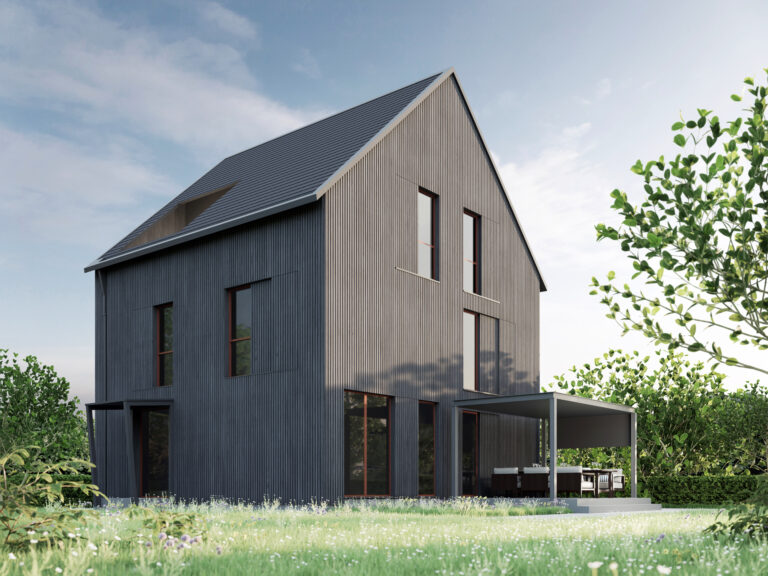
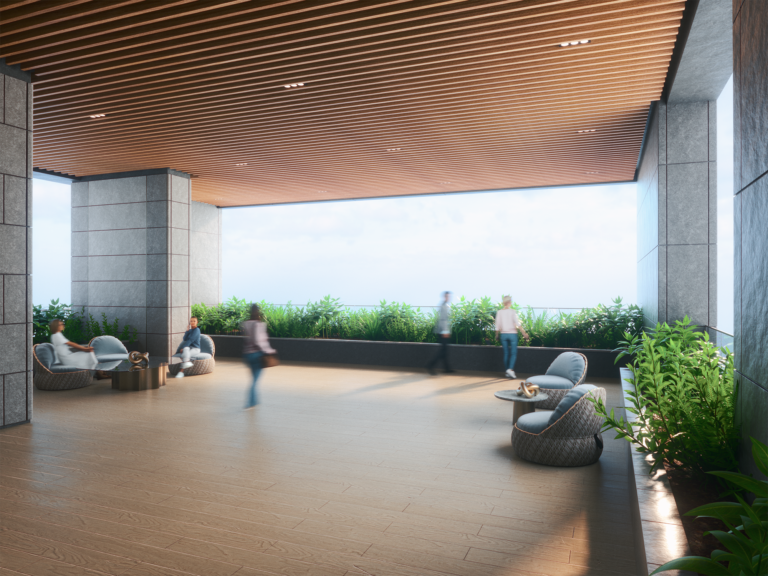
At Pulse Design, we treat compound estates as continuous spatial stories, not collections of individual structures. Our workflow begins with the masterplan logic: how do the parts relate, where are the privacy thresholds, what is the sequence of arrival and circulation? From there, we build a staged visualization strategy that includes sequenced flythroughs, interior-exterior transitions, and aerial masterplan animations that make density feel intentional and privacy feel tangible.
We have delivered 3D visualization for residential compounds, resort estates, and branded residences across Switzerland, Europe, and Asia. Every project is built to shorten the distance between contract and confidence.
Final thoughts
Compounds are back because buyers want both connection and autonomy—together, but not too together. Selling that balance off-plan requires more than beautiful images. It requires a visual strategy that walks buyers through the experience of living there.
Selling a compound or resort estate off-plan? Pulse Design delivers staged masterplan visualization and sequenced flythroughs that help buyers see, trust, and commit before ground is broken.